
Введение
If you live in Moscow or the Moscow region and want to learn to ride quad bikes (ATVs) or buggies, this guide walks you through everything important: vehicle overviews, how practical training helps you obtain AI and AII categories, preparing for Гостехнадзор exams, safety-ready tips, equipment selection, and fostering an active outdoor lifestyle.
Quick overview: quad bikes vs. buggies
— Quad bikes (ATVs): four-wheeled off-road vehicles designed for single riders or a rider+passenger on some models. Good for forest tracks, fields and utility work.
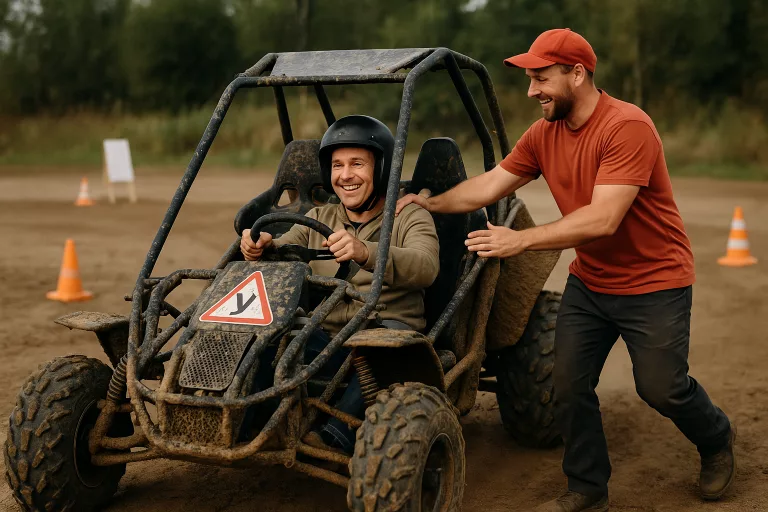
— Buggies (side-by-sides, UTVs): usually wider, often with roll cages, seating for two or more, and greater stability at higher speeds. Better for recreational rides with a passenger and for tougher terrain.
Key differences:
— Stability: buggies generally more stable; quads require better balance and body positioning.
— Control: quads use body weight to steer; buggies use a steering wheel and foot pedals.
— Use: quads can be nimble in woods; buggies excel on dunes, trails and group rides.
Licensing in Russia: AI and AII — what training covers
Many regional regulators (Гостехнадзор) classify ATV/buggy operation under special categories such as AI and AII. Practical training prepares students for both theoretical and practical parts of state exams.
Training typically covers:
— Vehicle design and basics: engine, drivetrain, braking, basic maintenance.
— Traffic rules and off-road regulations relevant to ATVs/buggies.
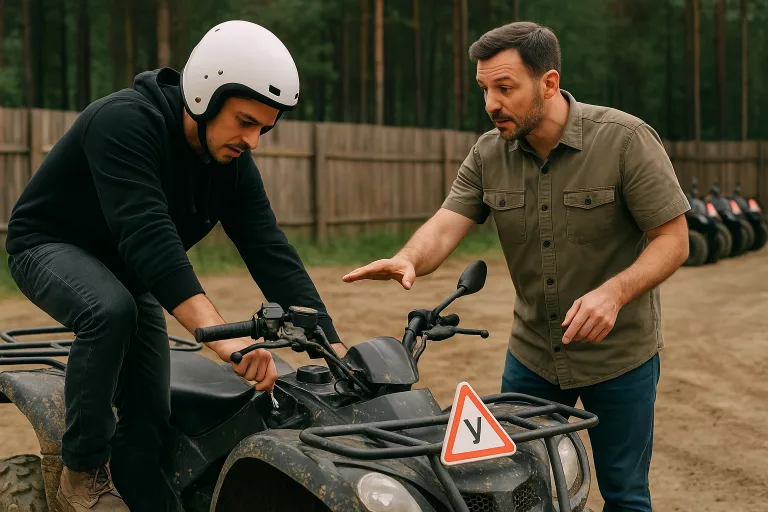
— Safe driving techniques: posture, turning, speed control, load limits.
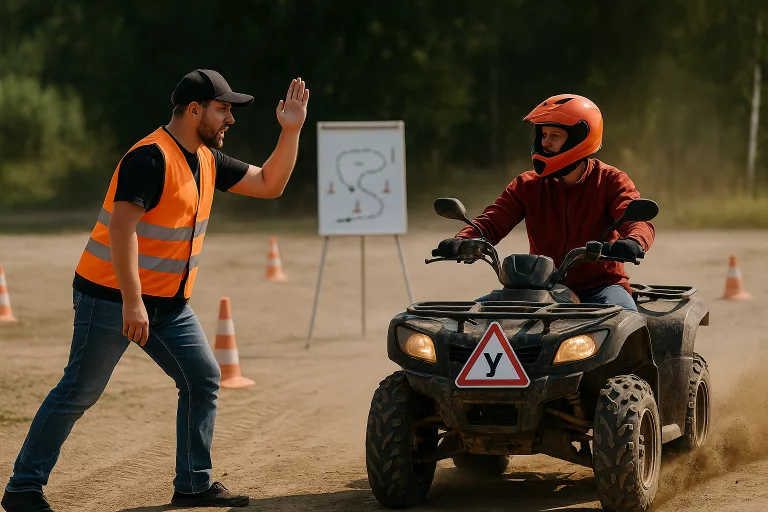
— Practical maneuvers: slalom, cone courses, figure-eights, steep climbs/descents, emergency braking and recovery.
— Preparation for Гостехнадзор exam format: documentation, technical checks, and test maneuvers.
Tip: Always verify the exact names and requirements of licence categories with your local Гостехнадзор office in Moscow or Московская область, because regional rules and category labels can vary.
Preparing for the Гостехнадзор exam — practical checklist
— Documents: passport, medical certificate (if required), prior driving licences if applicable, photos, and application forms.
— Theory prep: study rules for off-road vehicle operation, basic vehicle mechanics, and safety regulations. Many schools provide study materials and mock tests.
— Practical prep: practice the standard exercise sequence (slalom, figure-eight, obstacle negotiation, emergency stops) under instructor supervision.
— Pre-exam vehicle check: tyres, steering, brakes, lights (if applicable), kill switch and seat belts/roll cage integrity for buggies.
— On exam day: arrive early, well-rested, with appropriate protective gear and vehicle paperwork.
Practical safe-driving tips (Moscow-specific considerations)
— Learn to read terrain: Moscow region has mixed soils — clay, sand, forest roots and seasonal mud. Adjust throttle and tire pressure accordingly.
— Seasonal adjustments:
— Spring: watch for thaw ruts and flooded tracks.
— Summer: dust reduces visibility; hydrate and protect from sun.
— Autumn: leaf cover hides obstacles; beware of slippery wet roots.
— Winter: snow and ice require studded tires and slower speeds; use warm protective clothing.
— Speed and space: keep safe following distance on trails; reduce speed before blind corners.
— Body position on quads: stand on pegs when crossing rough ground; shift weight forward on climbs and back on descents.
— Emergency braking: practice progressive braking; avoid locking front wheel on quads.
— Passenger safety: never carry more passengers than the vehicle design allows.
— Environmental respect: stay on designated paths in Moscow parks and nature reserves; avoid protected forests and marshes.
— Group rides: use lead and sweep riders, maintain radio or phone contact, carry GPS coordinates.
Choosing equipment — checklist for Moscow riders
— Vehicle selection:
— For beginners: low-to-mid power quad (engine 250–450 cc) or small buggy with roll cage and traction aids.
— For mixed use (work + recreation): utility ATVs with racks and stronger suspension.
— For sport: higher-power machines and performance suspension (only for experienced riders).
— Safety gear (must-haves):
— DOT/ECE-certified helmet (full-face preferred for buggies; off-road style for quads)
— Goggles or visor, gloves, chest/back protector, knee and elbow guards
— Durable riding boots that cover the ankle
— High-visibility layer for group rides or low-light conditions
— Maintenance kit and spares:
— Tire repair kit, spare tyre or tubes, basic tools, spare parts for common failures
— Tow strap, hand pump, fire extinguisher (for buggies)
— Communication and navigation:
— Mobile phone with power bank, two-way radios for groups, and offline GPS maps
— Insurance and registration:
— Check with local Гостехнадзор and insurers about registration and available insurance for off-road vehicles in Moscow region.
Choosing a training school in Moscow
Look for:
— Гостехнадзор-recognized or affiliated schools
— Experienced instructors with certificates and good reviews
— On-site test ranges that simulate exam conditions
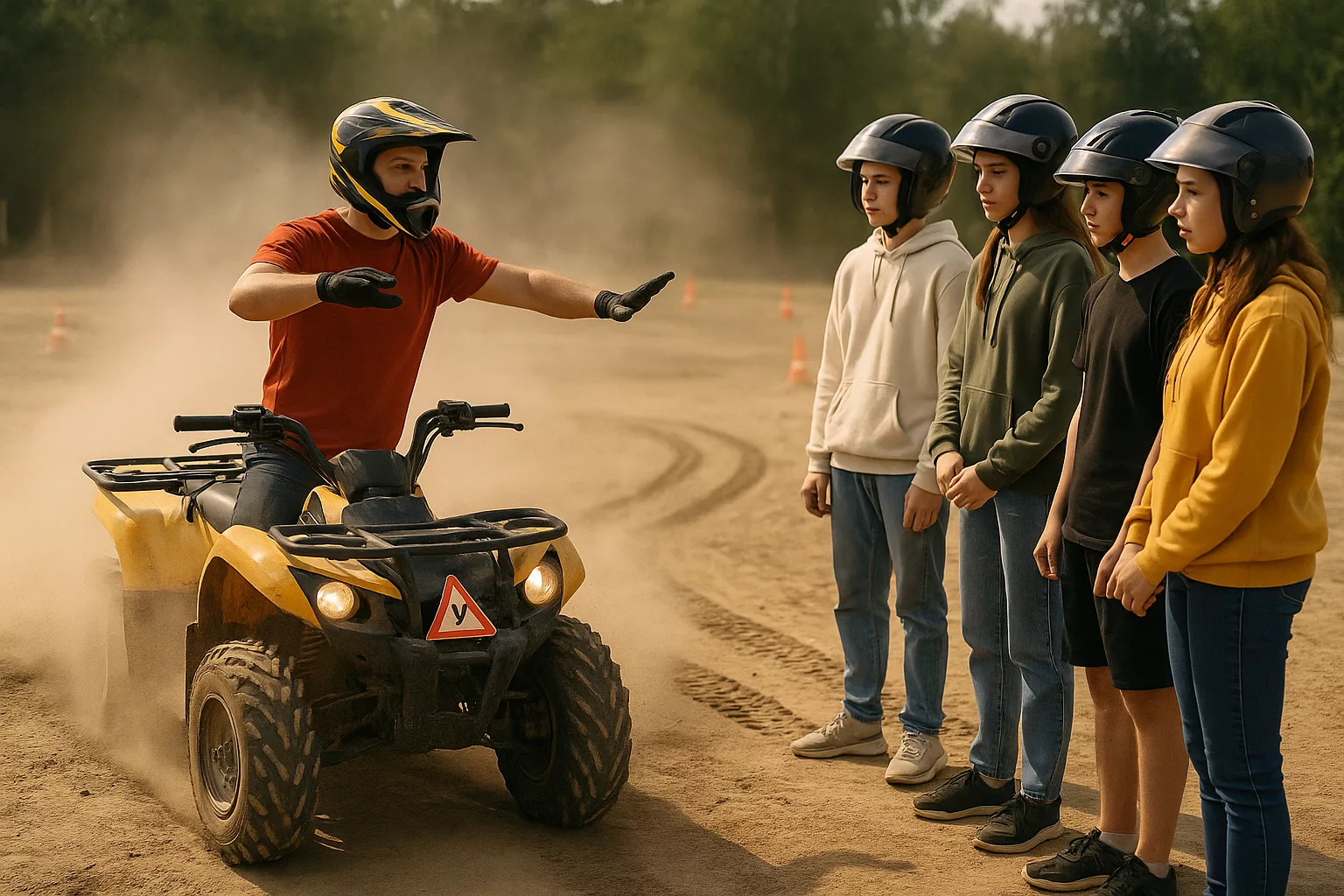
— Small group sizes or one-on-one instruction for faster progress
— After-training support (document assistance, mock exams)
— Clear pricing and included services (gear, vehicle use)
How to verify:
— Ask to see instructor certifications and the school’s registration
— Read recent student testimonials and ask for references
— Confirm they prepare students specifically for Гостехнадзор practical exams
Building an active outdoor lifestyle
— Start gradual: combine training rides with regular short weekend jaunts in nearby parks (pay attention to legal access and seasonal restrictions).
— Join Moscow-area clubs or guided rides to learn local trails and etiquette.
— Cross-train: mountain biking, hiking and basic mechanics improve balance, fitness and vehicle care skills.
— Family and social rides: choose buggies for family outings and quads for