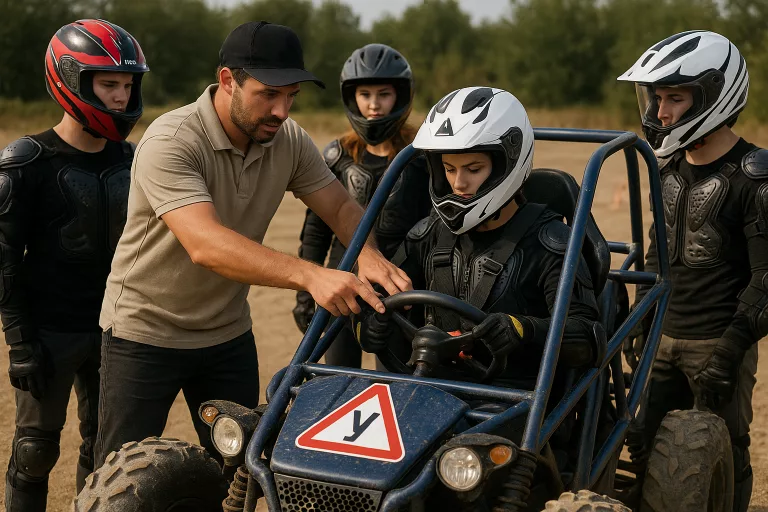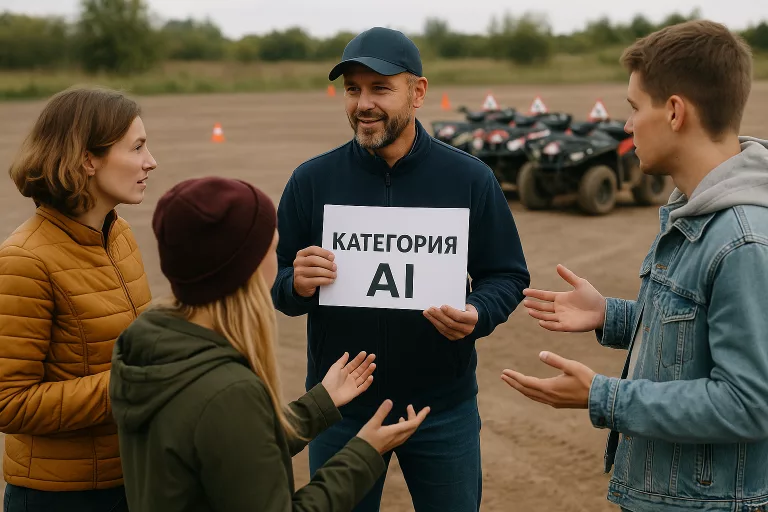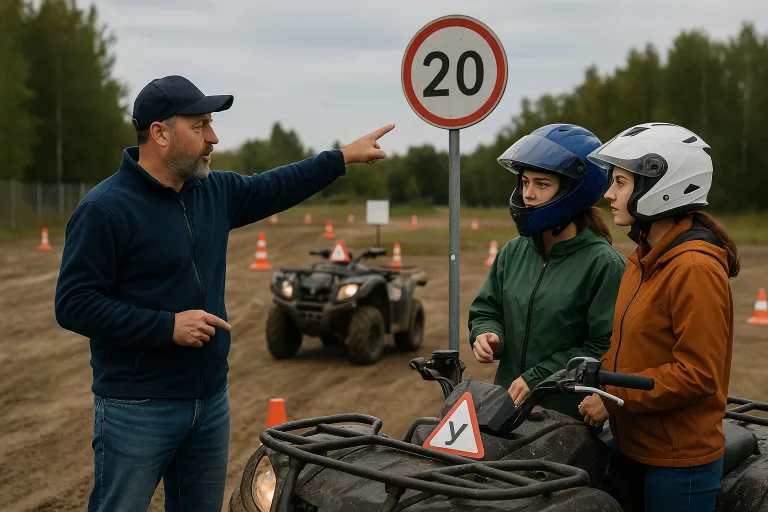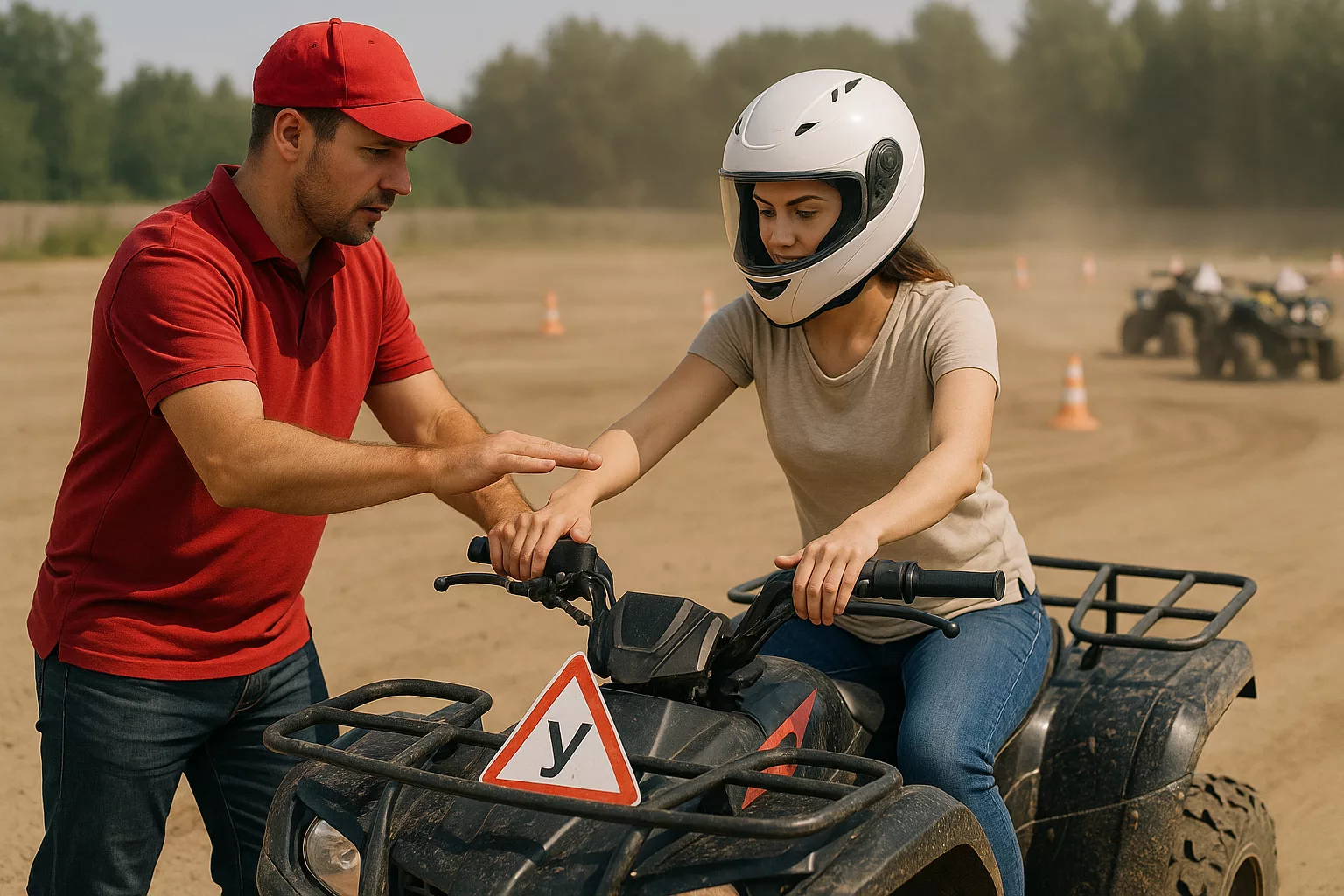

Why train for quads and buggies in Moscow
Riding a quad bike or buggy is an exciting way to explore Подмосковье (Moscow region), but these machines demand specific skills, legal knowledge and the right equipment. Proper training helps you pass AI/AII licensing requirements, prevents accidents, and makes every ride more enjoyable.
Understanding AI and AII categories and Gostechnadzor
— AI and AII: In Russia these categories cover operation of certain off-road vehicles (quad bikes, buggies, small ATVs). Exact scope can vary — always check the current rules with local authorities.
— Gostechnadzor (Гостехнадзор): the state technical supervision body that inspects and registers off-road vehicles and conducts practical exams in many regions. Requirements and exam formats can differ by region; contact your local Gostechnadzor office for the official list of documents and procedures.
How to obtain an AI/AII driving license — practical roadmap
1. Choose a certified training school in Moscow or the Moscow Region (Подмосковье).
2. Enroll in the AI/AII course: theory + practical hours (schools usually list required hours).
3. Study theory: vehicle operation rules, safety regulations, maintenance basics, legal responsibilities.
4. Practice practical skills: maneuvers required for the exam (see section below).
5. Pass the internal school assessment and obtain a training certificate.
6. Register for the Gostechnadzor exam and bring required documents (passport, training certificate, medical clearance, vehicle documents). Confirm exact paperwork with the local office.
7. Pass the Gostechnadzor practical and/or theoretical tests and receive your license/qualification.
What trainers in Moscow will focus on (common exam elements)
— Pre-ride vehicle inspection and safety checks
— Mounting and dismounting safely
— Controlled acceleration and deceleration (throttle/brake control)
— Low-speed maneuvers: slalom, figure-eight, precise reverse
— Emergency stop and obstacle avoidance
— Uphill and downhill techniques, crossing uneven terrain
— Proper use of seat belts/roll cages (buggies) and protective gear
— Safe loading, towing and recovery basics
Practical driving tips — on-ride techniques
— Start slow: master balance, clutch/throttle feel and steering input at low speed before increasing pace.
— Weight shift: on corners and uneven terrain, shift your weight to maintain traction and stability.
— Smooth throttle: sudden throttle causes loss of traction. Smooth inputs = better control.
— Controlled braking: use both front and rear brakes where applicable; avoid hard braking on loose surfaces.
— Line selection: look ahead and choose the path with the least risk of getting stuck or flipping.
— Descending steep slopes: go slowly in low gear, avoid braking hard; use engine braking.
— Ascending: maintain steady momentum—too little speed causes loss of traction, too much can be unstable.
— Water crossings: check depth and bottom composition; proceed slowly and steadily.
— Recoveries: carry a tow strap, shackles and a compact winch if frequent deep-mud riding is expected.
Pre-ride and maintenance checklist
— Tires: pressure and tread appropriate for terrain and season
— Controls: throttle, brakes, clutch and steering free of play
— Fluids: fuel, engine oil, coolant, brake fluid
— Battery: charged and terminals clean
— Fasteners: nuts and bolts tight, especially on suspension and wheels
— Lights and electricals working (if riding in low light)
— Recovery gear: basic toolkit, tow strap, shovel, winch, first-aid kit, fire extinguisher (optional but wise)
Safety equipment — what to buy and why
— Helmet: certified off-road helmet (full-face or off-road style)
— Goggles or shatterproof visor
— Gloves: reinforced palms and knuckles
— Boots: ankle support and durable sole
— Protective clothing: abrasion-resistant jacket/pants, chest protector, knee and elbow pads
— Neck brace (for aggressive riding)
— High-visibility vest for group rides or low-light conditions
— Two-way radio or fully charged phone + power bank; GPS or offline map for routes
Choosing the right quad or buggy for Moscow conditions
— Purpose: recreation, trail riding, work/utility — select accordingly.
— Engine size: small displacement for beginners/easier handling; larger engines for experienced riders or heavy-duty use.
— Drive configuration: 2×4 for light trails, 4×4 for deep mud, snow and steep terrain.
— Transmission: CVT automatics are easier for newcomers; manuals offer more control for advanced riders.
— Suspension: longer travel and adjustable damping for rough trails around Подмосковье.
— Safety features: roll cage and proper seat belts on buggies, good lighting for early evenings.
— Winter considerations: electric start reliability, heated grips (optional), and cold-weather tires.
Exam preparation tips: practical drills to practice before Gostechnadzor
— Precision stop: accelerate to low speed and perform controlled emergency stops.
— Slalom