
Introduction
Looking to learn how to ride a quad bike or buggy safely around Moscow and the Moscow Oblast? Whether you want to get certified for categories AI and AII, prepare for exams with Gostechnadzor, or simply improve your off-road skills, this guide covers practical training tips, equipment recommendations, vehicle overviews, and ways to stay active outdoors.
Quick overview: quad bikes vs buggies
— Quad bikes (ATVs)
— 4 wheels, typically ridden straddling the seat.
— Come in sport, utility and youth models.
— Pros: maneuverable, simpler to maintain, versatile on rough trails.
— Cons: less protection in rollovers; require good balance and body positioning.
— Buggies (UTVs / side-by-sides)
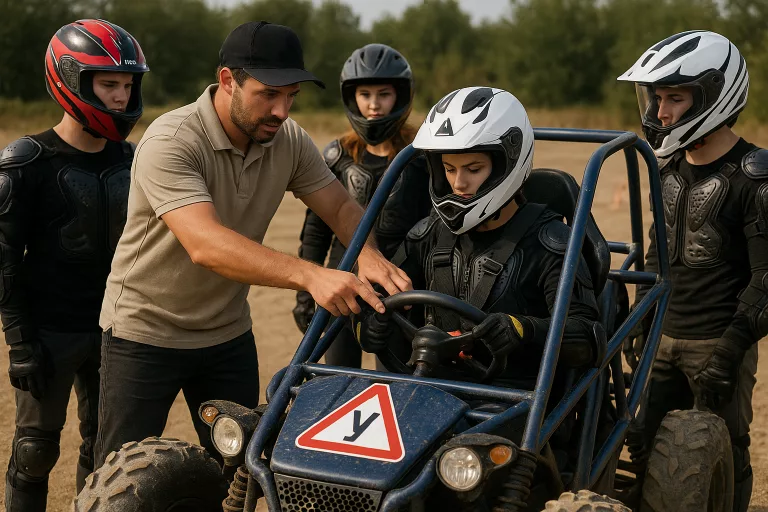
— Enclosed or semi-enclosed cabin with steering wheel and seats.
— Often designed for passengers, cargo, or sport use.
— Pros: better rollover protection, more stable at speed, suitable for family trips.
— Cons: larger footprint, often more expensive, needs more space and maintenance.
Understanding AI and AII categories (general guidance)
— In Russia, off-road vehicle operation may require specific categories and certification. Many training centers and regulators (including Gostechnadzor) distinguish vehicle classes by weight, engine power and intended use.
— Action: check current local requirements with your regional Gostechnadzor office or an accredited driving school in Moscow before enrolling — regulations and category names can change.
How training works: theory + practice
— Theory sessions
— Vehicle construction basics (engine, transmission, brakes, suspension).
— Safety rules, personal protective equipment (PPE), environmental etiquette.
— Traffic rules as applicable off-road and on public roads; insurance and registration basics.
— Practical lessons
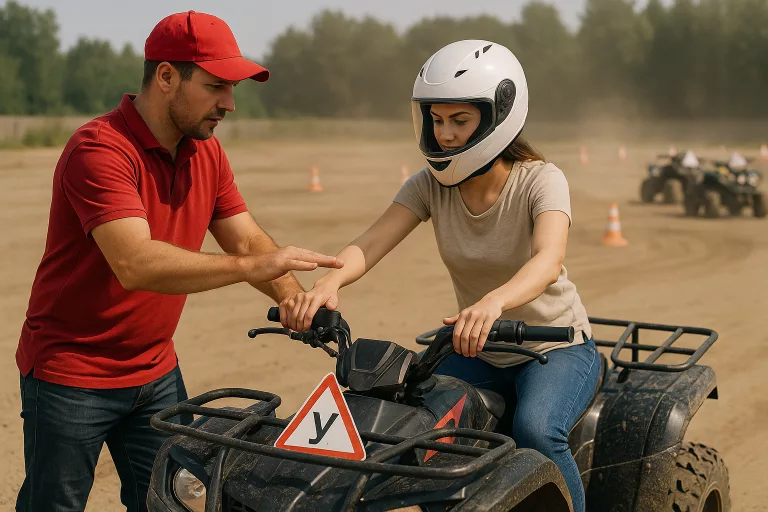
— Mounting/dismounting, posture, throttle/brake control.
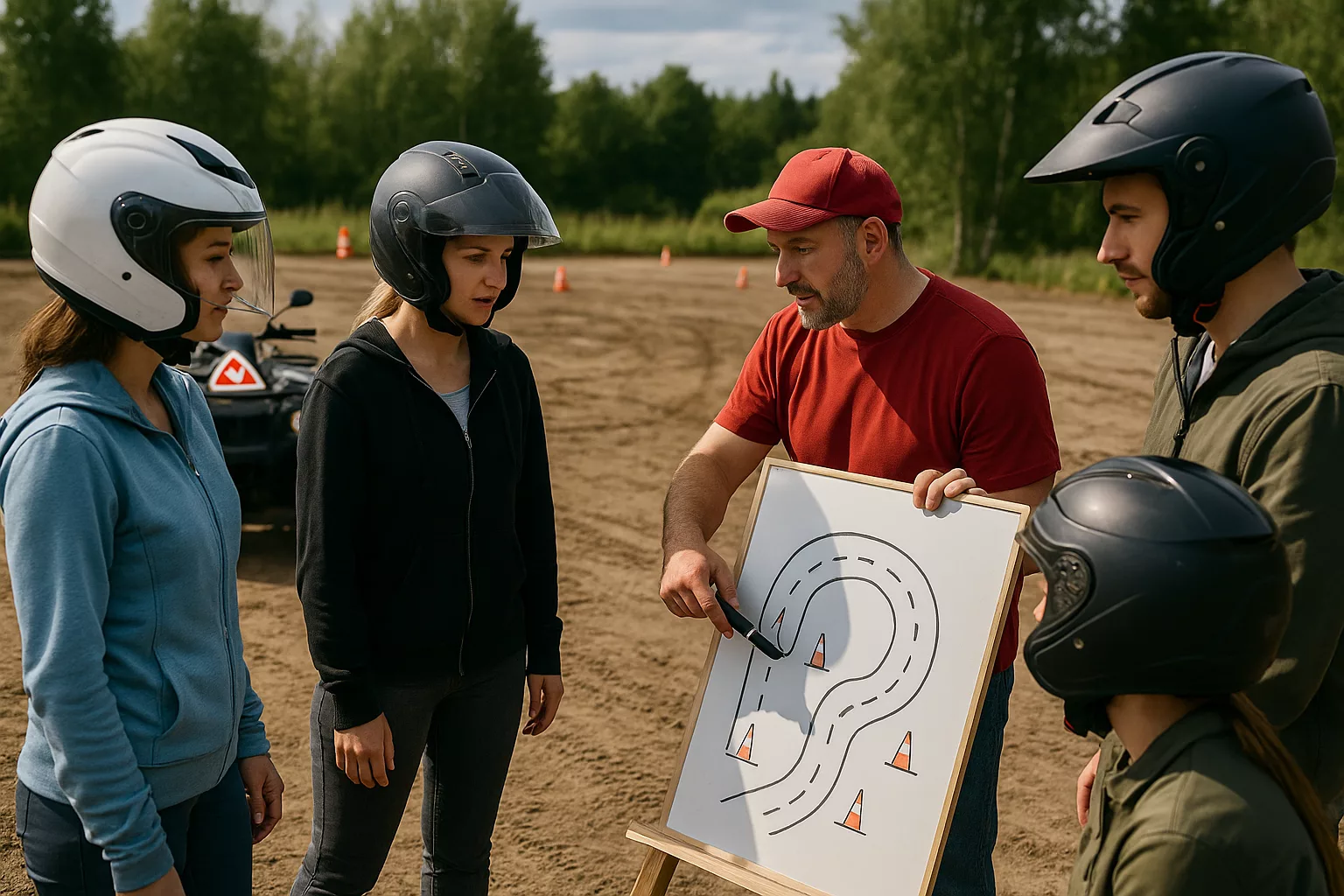
— Low-speed maneuvers: tight turns, figure-eights, slow control.
— High-speed stability, hill ascent/descent, mud and sand techniques.
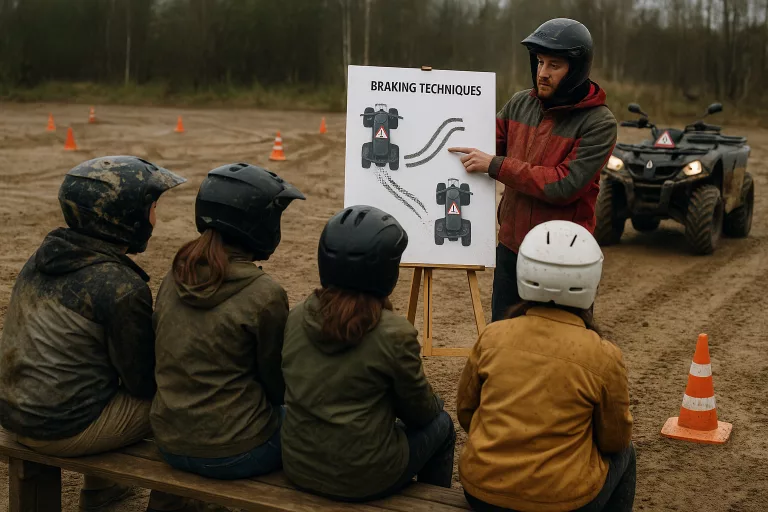
— Emergency braking, body weight shifting, avoiding obstacles.
— Typical course length
— Varies by school and license level: a few days to several weeks, with a mix of classroom and hands-on range time.
Preparing for Gostechnadzor exams
— What to expect
— Theory test (questions on vehicle safety, rules, and operational principles).
— Practical test on a closed range: maneuvers, obstacle navigation, emergency actions.
— Document checks and possibly a simple mechanical inspection.
— Documents commonly required
— Passport or ID, photos, medical certificate (fit to drive), application forms.
— Proof of training hours (if required by your course provider).
— How to prepare
— Study the official exam materials from Gostechnadzor or your training center.
— Practice all standard maneuvers until comfortable at varying speeds and surfaces.
— Familiarize yourself with the vehicle you’ll use in the exam (same type, similar power).
— Rest well before the test and double-check paperwork the day prior.
Practical safety tips for every rider
— Always wear approved PPE:
— Helmet (DOT/ECE rated), goggles/visor, gloves, reinforced jacket, pants, boots.
— Pre-ride checklist:
— Tires (pressure + condition), brakes, lights, throttle smoothness, fluid levels.
— Riding techniques:
— Look where you want to go — head and eyes lead the body.
— Shift weight proactively: lean into turns, move rearward on descents, forward on climbs.
— Use progressive throttle; avoid abrupt inputs on loose surfaces.
— Group riding etiquette:
— Maintain safe spacing, communicate hazards, agree on signals and routes.
— Emergency preparedness:
— Carry basic tool kit, first-aid kit, tow strap, charged phone, and GPS/location app.
— Tell someone your route and estimated return time.
Choosing the right equipment
— Helmets: full-face for buggies, off-road helmets for ATVs; ensure correct fit and certification.
— Clothing: abrasion-resistant jacket/pants, CE-rated armor inserts optional.
— Boots: ankle support, oil- and mud-resistant soles.
— Gloves: good grip and protection without restricting dexterity.
— For buggies: harnesses and roll cages are critical; consider side nets and roof protection.
— Accessories: winch (for recovery), skid plates, handguards, racks for cargo.
Buying vs renting vs training vehicles
— Rent if you need occasional practice or want to try different models before buying.
— Buy used to save money — inspect frame for bends, engine condition, maintenance history.
— New vehicles give warranty and latest safety features but cost more.
— When purchasing in Moscow, factor in registration with local authorities and seasonal storage.
Maintenance basics (keep your machine reliable)
— Post-ride checks: clean, inspect fasteners, lubricate chain (if applicable), air filter cleaning.
— Scheduled service: oil changes, brake checks, suspension inspection, tire checks.
— Winter storage: drain fuel or add stabilizer, disconnect battery, clean and cover.
Where to train and ride around Moscow
— Authorized ranges and training centers: look for accredited schools that prepare students for Gostechnadzor exams.
— Moscow Oblast offers many off-road tracks, forest trails and designated recreation areas — always use legal routes and respect protected zones.
— Clubs and guided tours: great for learning local trails, group safety, and social riding.
Promoting an active outdoor lifestyle
— Riding is a way to connect with nature, improve fitness, and reduce stress.
— Combine training with weekend camping, photography, or trail conservation efforts.
— Join local riding communities in Moscow to share tips, routes, and safety updates.
Quick checklist: before you book a course or exam
— Confirm exact licensing categories and requirements with Gostechnadzor (regional office).
— Choose an accredited training center with experienced instructors.
— Ensure training vehicle types match the exam vehicle or category.
— Prepare documents and medical certificate in advance.
— Invest in solid PPE and basic recovery equipment.
Final thoughts
Learning to ride quad bikes and buggies responsibly opens up a lot of outdoor opportunity around Moscow. Proper training, the right equipment, and careful preparation for Gostechnadzor exams will keep you safe and confident on the trails. If you’d like, I can help you draft a checklist tailored to your chosen vehicle, recommend Moscow-area schools, or create a study plan for the exam