
Introduction
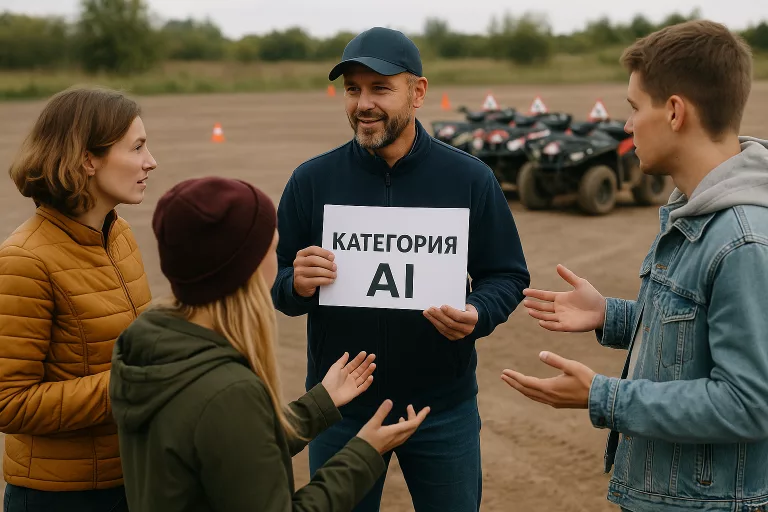
Training to drive quad bikes and buggies is an exciting way to expand mobility, enjoy outdoor recreation and pursue professional qualifications. For residents of Moscow and the surrounding region, obtaining the correct category licence, preparing for Gostechnadzor exams, choosing the right equipment and learning safe riding habits are essential. This practical guide covers everything from licence categories AI and AII to exam preparation, safety tips, equipment selection and ways to get active outdoors responsibly.
Quick overview: quad bikes vs buggies
— Quad bikes (ATVs): four-wheeled off‑road vehicles, often used for recreation, work on farms and search/rescue. They require active rider balance and careful throttle/brake control.
— Buggies (UTVs/side-by-sides): usually have seating for two or more, steering wheel, rollover protection structures and are often more stable at speed and on uneven ground.
— Choose based on use: solo recreational riding and tight trails → quads; passenger trips, utility work or stable fast runs → buggies.
Licences AI and AII — what you need to know
— In Russia the licensing system differentiates light motor vehicles and motorcycles by categories (terminology and exact category rules can change). «AI» and «AII» commonly refer to subcategories for two- and three/four-wheeled small engines. Confirm the current legal definitions with your local Gostechnadzor office in Moscow before applying.
— Typical requirements:
— Passing a theoretical exam (road rules, vehicle-specific regulations, safety).
— Passing a practical exam (maneuvering, controlled driving in a test area and possibly on public roads where permitted).
— A medical certificate confirming fitness to drive.
— Identity documents and application forms.
— Tip: If you’re converting an existing licence or adding categories, bring your current licence and all relevant paperwork to the training centre.
Preparing for the Gostechnadzor exam — step-by-step
1. Verify current rules: check the official Gostechnadzor (Гостехнадзор) office or authorised training school in Moscow for exact category definitions, list of documents, exam format and fees.
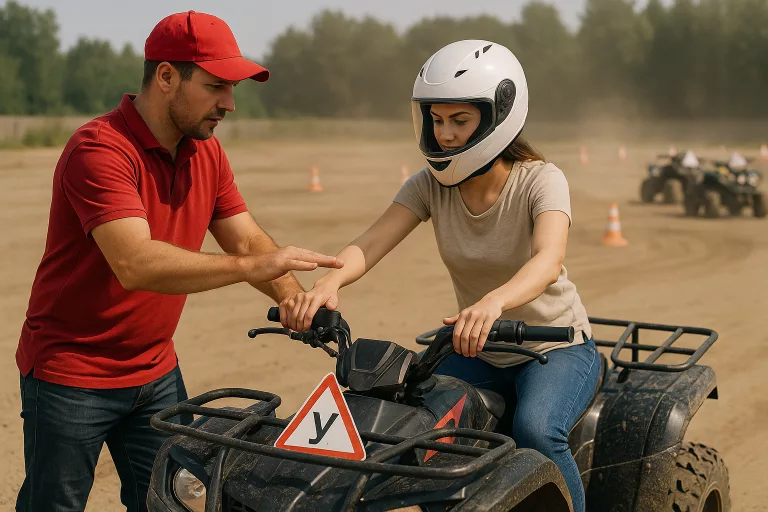
2. Enrol in an accredited course: choose a school approved for AI/AII training — they will prepare you for both theory and practice and usually provide exam booking assistance.
3. Study the theory:
— Learn traffic rules relevant to off‑road and slow-moving vehicles.
— Understand vehicle technical basics and safety procedures.
— Practice sample tests (many schools provide mock exams).
4. Practical training:
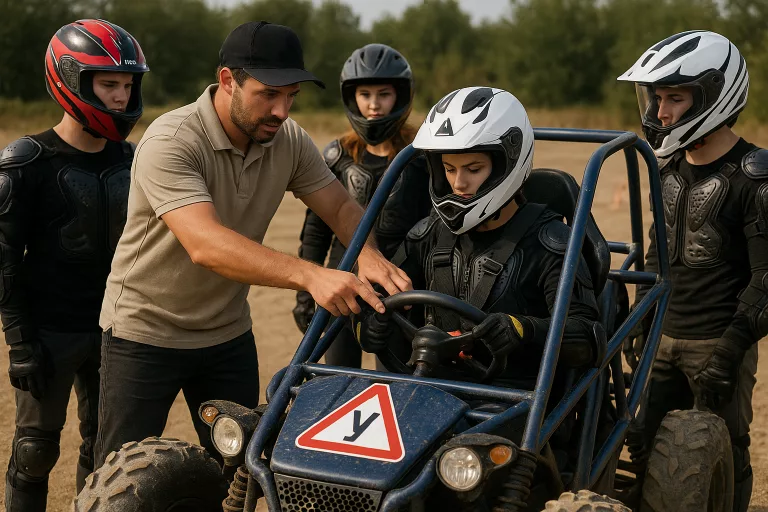
— Start in a controlled environment: basic handling, clutch/brake/throttle control, low-speed manoeuvres.
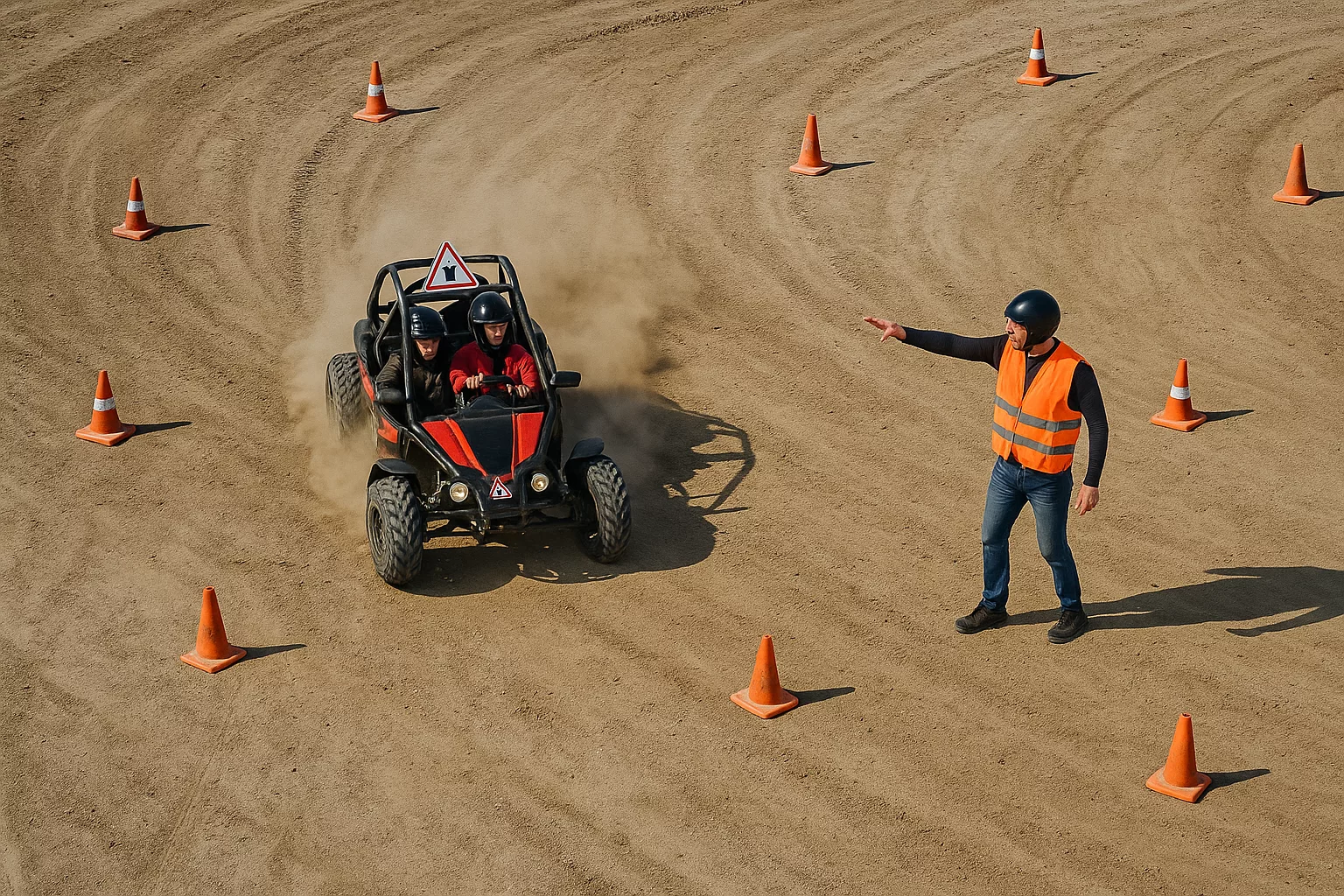
— Progress to off‑road conditions similar to Moscow’s training areas (soft soil, inclines, wet surfaces).
5. Mock exam: undertake at least one full mock practical under exam conditions.
6. Day of the exam: arrive early with required documents, wear appropriate protective clothing, and mentally rehearse the tasks.
Practical safety tips for riding
— Pre-ride checklist:
— Helmet (certified), gloves, long pants, jacket, boots and eye protection.
— Check fuel, oil, coolant, brakes, tyres and lights.
— Ensure seat, mirrors and cargo are secure.
— Riding basics:
— Start slow until you know vehicle responses; accelerate and brake smoothly.
— Keep a safe distance from obstacles and other riders.
— Shift your body weight for balance on quads (stand on footpegs when appropriate); on buggies keep seatbelt fastened and hands inside the roll‑cage.
— Avoid sudden inputs on loose surfaces—use gentle steering and throttle control.
— Riding with passengers:
— Only carry passengers if the vehicle and local laws permit.
— Passengers should hold on securely and follow seating instructions.
— Speed and terrain:
— Adjust speed to terrain, visibility and weather—Moscow clay soils and winter ice require particularly conservative riding.
— Emergency preparedness:
— Carry a charged phone, basic first aid kit, tow strap and a compact tool kit.
— Let someone know your route and expected return time.
— In case of serious accident or fire call emergency services (112 in Russia).
Choosing equipment and protective gear
— Helmet: certified (EEC, DOT or local equivalent) and well-fitted. Preferably full-face for quads; for buggies a sturdy open-face plus eye protection is acceptable if the vehicle has a strong rollover cage.
— Clothing: abrasion-resistant jacket and trousers, preferably with impact protection at elbows and knees. Layer for Moscow’s variable weather.
— Boots: over-ankle, non-slip sole and reinforced toe.
— Gloves: protective, breathable and with good grip.
— Additional safety: chest protectors, neck braces for aggressive riding, and an approved rollover cage or harness for buggies.
— Accessories:
— Tow straps, winch (if you plan remote or muddy routes), spare parts kit and tyre repair tools.
— GPS or map, power bank and a whistle for signaling.
Choosing the right quad or buggy in Moscow
— New vs used: buy new for warranty and known maintenance history; buy used from reputable dealers and request service records.
— Engine size and category: pick based on licence category requirements, intended use and rider experience. Lower displacement (e.g., 250–450 cc) is often better for learners.
— Suspension and ground clearance: important for rough Moscow oblast trails.
— Seats and ergonomics: test for comfort and fit—longer rides demand supportive seating.
— Dealer support: choose sellers with local service centres, spare parts availability and training options.
Training schools and where to practice in Moscow
— Pick accredited schools that offer:
— Certified instructors with experience in AI/AII categories.
— Training vehicles and mock exam sessions.
— Clear pass/fail statistics and transparent pricing.
— Practice areas:
— Designated off‑road parks and authorised training grounds in Moscow Oblast.
— Avoid riding in protected